
Running a Sex Offender Check in DeKalb County
The Tennessee Bureau of Investigation Sex Offender Registry is the main public channel for DeKalb County. It is updated daily from information that registering agencies submit. Begin with a name when one is known. Use an address, city, ZIP code, or the DEKALB county filter when the goal is awareness near a home, school route, park, or other familiar place. Map and list views answer different questions: a list is useful for matching a name, while a map helps place results around a location.
The DeKalb County Sheriff's Department is the local registering and verification contact. Call 615-597-4935 or visit 100 Public Square in Smithville when a local status needs review or suspected noncompliance should be reported. TBI also accepts registry questions at 1-888-837-4170 and tbisormgr@tbi.tn.gov. For a person who may have lived in another state, add the national search instead of treating one county result as a full history.
DeKalb Registry Verification Contact
DeKalb County does not publish a separate local registry database in the research materials. The state portal remains the public search, while the official county sheriff profile identifies the local agency channel. That split matters. TBI displays information received under the registration law, but the sheriff handles local reporting and can route a concern about an address or registration duty.
DeKalb County Sheriff's Department
100 Public Square
Smithville, TN 37166
615-597-4935
Use this line for local registration questions or suspected noncompliance. Call 911 only for immediate danger.
The county's Sheriff's Department page supplies its nonemergency and tip contacts, while the DeKalb County government site is the official route for current local notices. Do not visit or confront a listed address. Give law enforcement the profile name, address at issue, and the specific fact that prompted concern. That keeps the report focused and lets the agency compare it with nonpublic reporting data.
Searching the Tennessee Sex Offender Registry
TBI runs the statewide Tennessee Sex Offender Registry. Its search can be broad or narrow, and none of the listed fields alone guarantees that a result belongs to the person or place in mind. A county filter is useful for a DeKalb County overview. An address route is better for a specific neighborhood. Name fields help distinguish people, but spelling and aliases still call for care.
- Open the official TBI registry and review its notices before searching.
- Enter a last name and optional first name, or choose DEKALB in the County field. Address, city, and ZIP inputs support a place-based search.
- Compare the result list or map with the location and identity details already known. Do not rely on a similar name alone.
- Open the full profile. Read status, classification, offense, address, report dates, physical identifiers, and update information together.
| Field Label | Type | Required | Notes |
|---|---|---|---|
| Last Name | Text | Search-dependent | Starts the name route |
| First Name | Text | No | Narrows a name result |
| County | Dropdown | No | Choose DEKALB for county results |
| City / ZIP Code | Text or selection | No | Focuses the location route |
| Address | Text | Address route | Supports proximity and map review |
| Map / List | View controls | No | Switches geographic and list displays |
The official TBI registry search screen shows how these controls work together.
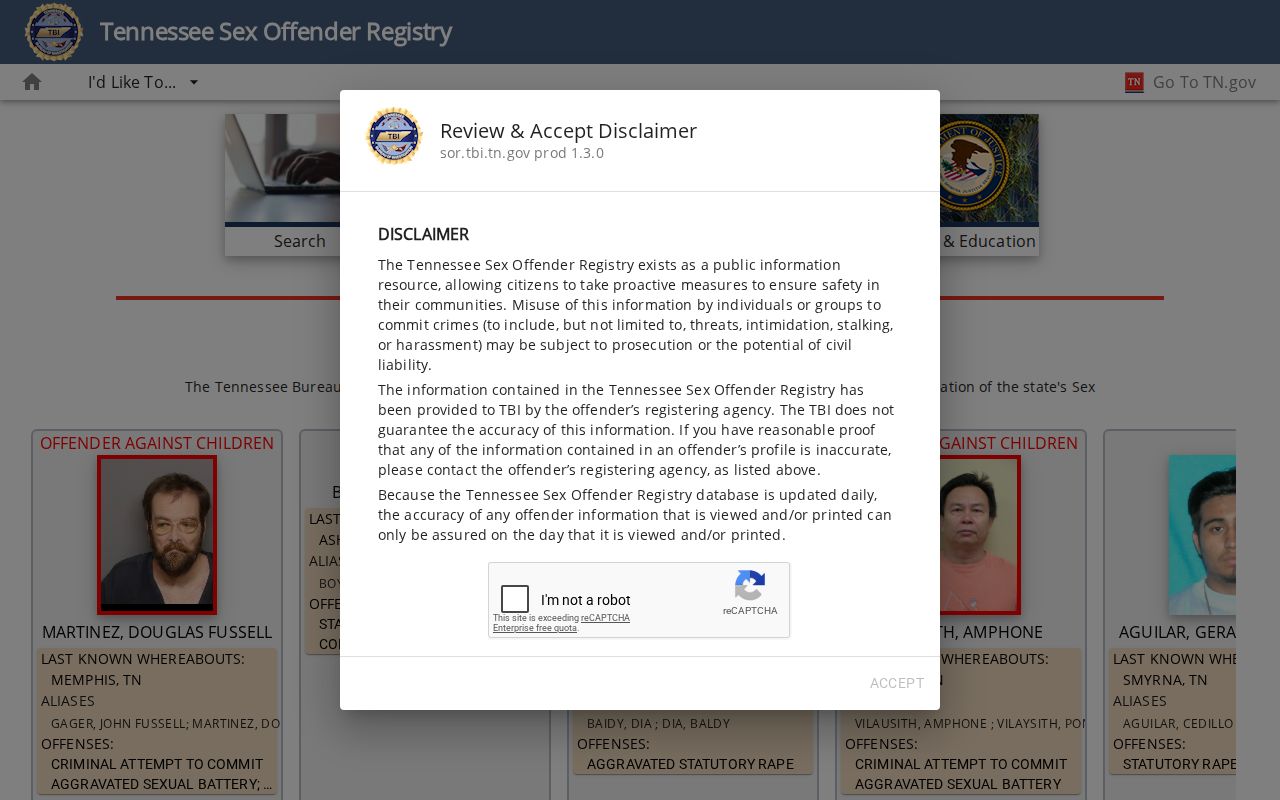
That official interface is the starting point for both name-based and DeKalb County location searches.
DeKalb Registry Address or Name
Name and address searches solve distinct problems. A name search works when the person is already known, but it can produce uncertainty when names resemble one another. Compare the displayed photo, date of birth, physical description, aliases, status, and registering agency. Avoid using one field as proof of identity.
An address search is better for DeKalb County community awareness. Review the map as a location tool, not a live tracking system. A listed primary or secondary address is reported registry information, and the page may change after an agency sends an update. TBI says the registry updates daily, yet the display still depends on local agencies supplying the facts required by law. A recent search should be repeated when location matters.
Note: A daily site update does not mean every underlying fact was verified that day by the DeKalb County Sheriff's Department.
What a Registry Profile Shows
A Tennessee profile brings several public panels into one place. It can show the photograph, identity and physical description, primary and secondary addresses, vehicles, aliases, marks or tattoos, offense history, reporting dates, supervision details, higher-education information, status, classification, and the responsible agency. Each panel has limits. A vehicle row does not say who is driving it at a given moment, and an address is not a promise that the person is present.
| Name & Aliases | Reported names used to help distinguish identity |
|---|---|
| Photo & Description | Photo, hair, eyes, gender, race, height, weight, date of birth, and identifying marks |
| Addresses & Agency | Primary and secondary locations, county, and registering agency |
| Vehicles | Year, color, make, model, type, tag, and state when reported |
| Criminal History | Rows that may include date, charge, disposition, and offense details |
| Status & Classification | Registry standing, state category, and TID |
| Reporting Information | Last registration or report date and last information update |
| Supervision & Education | Supervision site or officer and higher-education information when applicable |
The TBI registry information page supplies the law and safety context behind these fields.
Reading those official explanations with a profile helps prevent a field label from being stretched beyond what it states.
DeKalb Registry “Not Available” Dates
“Not Available” has a defined use on the Tennessee registry. TBI says that when the last registration or report date carries that wording, the bureau has not received the information as directed by the Act. It is not a safe basis for guessing that a duty ended, a person moved, or no report was due.
For a DeKalb County entry, send the uncertainty to the proper agency. The sheriff can receive a suspected local compliance report, while TBI can address a registry data concern. Give the profile details and explain which date or field is at issue. Do not attempt to investigate at the listed residence. Agency staff can compare the public display with reports that are not available to the public.
Registration Requirements and Levels in Tennessee
Tennessee uses offense-based categories rather than simply labeling every person Tier I, II, or III. T.C.A. §40-39-202 defines covered offenses and categories. T.C.A. §40-39-207 controls termination rules and lifetime categories, while §40-39-204 addresses reporting, fees, and repository administration. The precise offense and current official instructions control, so a broad label should never substitute for the statute or the profile.
| Level / Tier | Duration | Verification Frequency |
|---|---|---|
| Sexual offender | Termination may be petitioned only when §40-39-207 conditions and offense rules allow | Generally annual verification |
| Violent sexual offender | Generally lifetime for designated violent offenses | Generally quarterly reporting |
| Violent juvenile sexual offender | Depends on juvenile provisions and court orders | Specialized statutory requirements apply |
Prompt reporting duties apply to changes identified by law. Duration and frequency can turn on the exact offense, classification, and court history. Confirm those points through the current TBI material instead of assigning a federal tier label to a Tennessee record.
Note: Tennessee classifications are offense-based, so federal tier labels do not replace the category shown by the state registry.
DeKalb Offender Checks Across States
The TBI registry is the right Tennessee source, but it is not the national layer. A move, an older out-of-state registration, or a search that spans more than one state calls for the U.S. Department of Justice's National Sex Offender Public Website. NSOPW sends a query across participating jurisdictions and should be used with, not in place of, the DeKalb County search.
The National Sex Offender Public Website provides that cross-state route.
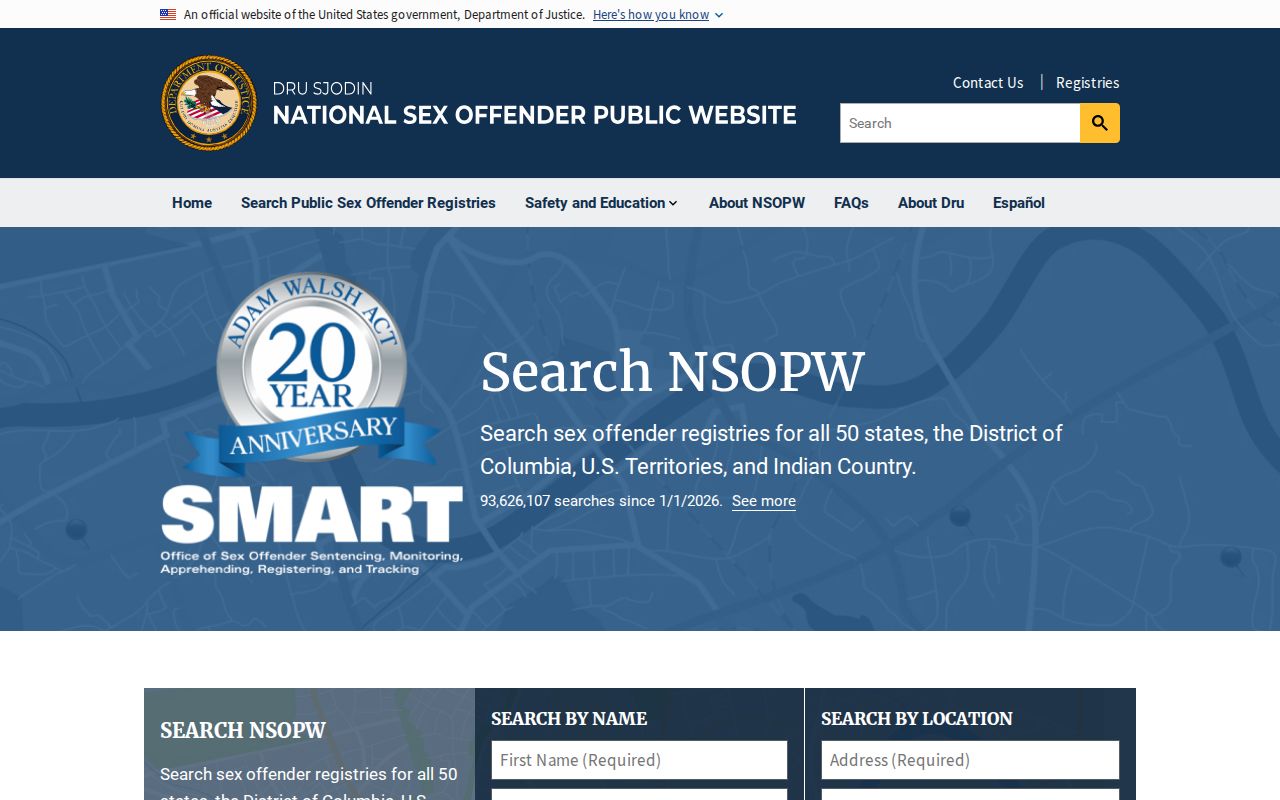
A national result still needs careful identity review and, when the offense outcome matters, confirmation from the court that holds the certified case record.
Registry and court records have different jobs. The registry states public registration information. A certified judgment documents the filed charge, disposition, and sentence. When those details must be established, use the DeKalb County criminal court case record rather than treating a registry line as the full case file.
DeKalb Registry Location Restrictions
T.C.A. §40-39-211 contains Tennessee location and conduct restrictions, including a 1,000-foot rule for specified places and offenses. The statute also contains exceptions. A map pin alone cannot decide whether a given address violates the law because the offense, classification, site type, measurement, and any statutory exception may matter.
Use the DeKalb County map for awareness. Send a suspected violation to the Sheriff's Department or TBI with the address and the reason for concern. Law enforcement, not a member of the public, should determine whether the facts meet the statute. If a threat is immediate, call 911. For a nonurgent registration question, use the sheriff or TBI registry contact.
Lawful Use and Community Notification
Registry access supports public safety and informed community planning. Read the result as a government report with defined fields, not as a prediction. Do not infer present danger, permanent residence, or facts that do not appear. If a listing seems wrong, TBI is the data contact. If conduct suggests a local registration violation, notify the DeKalb County Sheriff's Department and let officers assess it.
Use registry information lawfully: Misusing registry information to harass, threaten, intimidate, damage property, or pursue vigilantism is a crime under Tennessee law. The registry is governed by the Sex Offender and Violent Sex Offender Registration, Verification and Tracking Act, T.C.A. §§40-39-201 through 40-39-213.
Contact can also jeopardize victims and investigations. Keep a safety plan focused on lawful steps: review the official entry, check both map and list views, save the agency contact, and report a specific concern. The registry is a notice system. It is not permission to punish, shame, follow, or confront anyone.
Note: Report suspected noncompliance to the sheriff or TBI and reserve 911 for an immediate threat.