
Arrest History in DeKalb County
DeKalb County arrest records begin with the agency that took action. The Sheriff's Department handles county and unincorporated incidents and operates the jail. Smithville Police Department and Alexandria Police Department create city incident and arrest reports. Tennessee Highway Patrol holds its own highway enforcement and crash records. TBI may handle selected investigations, but its TORIS product is a state repository history rather than the original local report.
The jail creates the booking sheet after intake. General Sessions or Criminal Court creates a separate case if charges are filed. TBI creates a repository cycle when qualifying fingerprints arrive and later links a reported disposition. These records can differ for sound reasons. Each custodian records a different stage, and one system may update before another.
An arrest report usually focuses on the officer's alleged facts, the time and place, the legal basis for custody, and evidence or property. A booking record focuses on intake, identity, fingerprints, photograph, charge entry, bond, and release. Neither document establishes a conviction. The signed court judgment supplies that answer after prosecutors and the court act.
Call for a DeKalb County Booking
No verified official live DeKalb County jail roster exists on the county website. For present or recent custody, call the Sheriff's Department at 615-597-4935 or 615-597-4043, or visit 100 Public Square, Smithville, TN 37166. Ask for current custody, booking number, initial charge, bond, and court destination. Request the booking sheet for a fixed record. The office may require a written Tennessee Public Records Act request for copies.
The official Sheriff's Department page presents its law-enforcement role, contacts, and anonymous tip line.
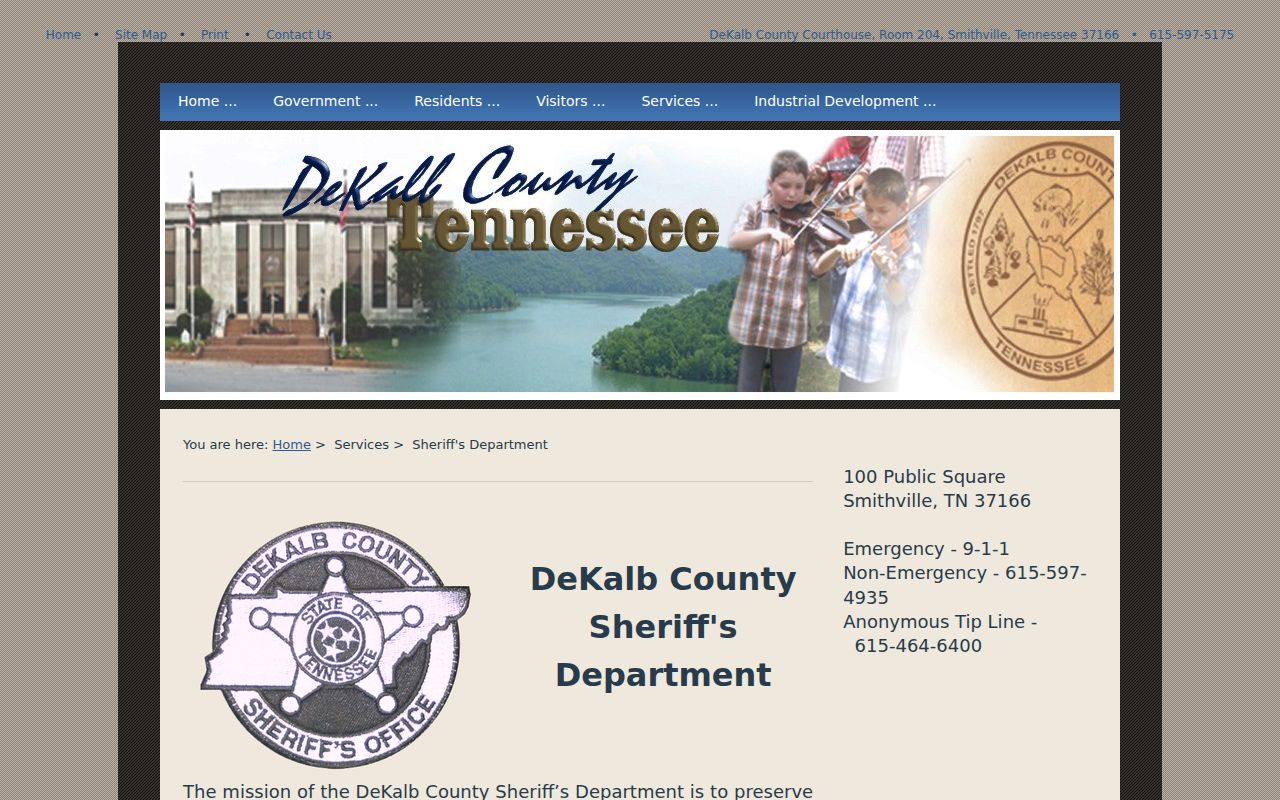
The department page provides the official local route when a commercial jail listing or an old report cannot confirm present DeKalb County custody.
The county's official Sheriff Patrick Ray profile identifies the elected sheriff, who has served since 2006, and confirms the office's duties over arrests, jail supervision, court process, and courthouse order.
DeKalb County Sheriff's Department
100 Public Square
Smithville, TN 37166
615-597-4935
Secondary: 615-597-4043
Fax: 615-597-2536
How to Look Up DeKalb County Arrests
A complete search uses all documented routes because DeKalb County has no single arrest portal. Start with the agency and jail, then trace the filed court case. Use the state repository only for its broader Tennessee scope, and use FOIL only after felony sentencing or supervision makes it relevant.
- Identify the arresting agency and approximate time. Call the sheriff for jail custody even when a Smithville or Alexandria officer made the arrest.
- Ask the sheriff for the booking number, charge, bond, release status, and court destination. Request the booking sheet, not a vague background check.
- Request the incident or arrest narrative from the arresting agency. Then call the Circuit Court Clerk at 615-597-5711 to learn what was actually filed.
- Order the TBI's $29 TORIS name check when a Tennessee fingerprint-supported history is needed. Search TDOC FOIL for sentenced felony custody or supervision, not county pretrial detention.
- When phone or published records are not enough, send a narrow TPRA request with the event date, location, agency, record type, and incident, booking, or case number.
A Tennessee custodian may ask for proof of state citizenship. If prompt access is not practical, the agency generally has seven business days to provide the record, deny it with a legal basis, or state how much more time is reasonably needed.
Phone contact is best for finding the proper custodian and checking present custody, but an oral request may not be enough for copies. A written request should identify the incident or arrest report, booking sheet, jail log, dispatch entry, 911 audio, photograph, or body-camera file by name. Include a narrow date range and avoid asking the office to compile a new background report.
Four Records Follow a DeKalb Arrest
One DeKalb County arrest can leave four distinct records. The arresting agency records the alleged event and officer action. The jail logs intake, identity, property, initial charges, bond, and release. The court records the filed complaint or indictment and every later disposition. TBI joins qualifying fingerprint submissions to reported court outcomes in its central criminal-history repository.
This division explains why a Smithville arrest may require three local calls. Smithville Police holds the incident narrative, the DeKalb sheriff holds the booking record, and Room 201 holds the filed case. An arrest charge may later be reduced, dismissed, or replaced by an indictment. Compare sources by incident, booking, and case number rather than assuming the first charge label is final.
Record flow: Agency Report › Jail Booking › Court Case › TBI Repository Cycle
Temporary disagreement does not prove that one custodian is careless. The jail may still show the initial count while a prosecutor files a different charge. A court can dismiss a count before the result reaches TBI. A transfer can end county custody while FOIL later shows state confinement. Use dates and identifiers to reconstruct the sequence instead of treating every screen as a current master record.
What an Arrest Record Shows
Ask for fields that identify the event and connect it to the next record. A DeKalb County booking sheet can show intake and release facts, while the arrest report adds the alleged facts and probable-cause narrative. Public copies may omit juvenile, protected-victim, medical, security, and active-investigation information. Mugshot release was not stated in a published county policy, so request a booking photograph specifically and accept a lawful redaction or denial.
| Booking Number | Local jail identifier used to request and match the intake record. |
|---|---|
| Booking Date & Time | Records when the jail received and processed the person. |
| Arresting Agency | Identifies whether Sheriff, city police, THP, or another agency created the arrest report. |
| Charges | Shows alleged offenses entered at booking, which may differ from later filed charges. |
| Bond | May list bond type, amount, and court-set release conditions then in effect. |
| Booking Photograph | No county release policy was located; request it directly from the sheriff under TPRA. |
| Release Status | May show release, transfer, or continued custody at the time of the record. |
The incident or arrest number points back to the originating agency's narrative. The booking number points to the sheriff's intake file. A court or case number links the event to General Sessions or Criminal Court. Request all three when tracing how an allegation changed. The officer name, statute, property inventory, release or transfer details, and fingerprint transaction may also appear when public and relevant.
DeKalb Arresting Agencies Keep Separate Reports
Request the narrative from the office that created it. Use the sheriff for an unincorporated DeKalb County event. For Smithville, begin with the police or city route at 104 East Main Street and city clerk phone 615-597-4745. For Alexandria, use 102 High Street and 615-529-2700. A highway crash or state enforcement record belongs with Tennessee Highway Patrol and the Department of Safety route.
No official countywide report-copy portal, Smithville PD request form, or Alexandria PD request form was found. A written request should name the record, event date and time, location, agency, incident number, desired format, and delivery method. Ask for the releasable redacted part if an active investigation or protected data prevents full disclosure.
The official DeKalb EMS and 911 page shows another part of the county's public-safety network.

Emergency response information is not an arrest log, and a dispatch or 911 record must be requested as its own record rather than assumed to be part of the booking sheet.
Recent Arrests and Booking Logs
The county publishes dated official arrest-report PDFs, but they are snapshots rather than a continuously updated jail roster. A dated report can document an event covered by that edition. It cannot establish present custody, and its silence cannot prove that no arrest occurred. Call the sheriff when time matters and ask for current custody plus the underlying booking sheet.
DeKalb County has not published jail capacity, unit details, a dedicated round-the-clock inmate line, or current visitation and vendor terms in the official sources reviewed. County notices describe approved funding for new jail construction and a 2026 inmate-transport grant. Those projects mean address, vendor, and operating details may change. Confirm present instructions before sending funds, mail, or arranging a visit.
For older history, ask whether the sheriff can retrieve the booking sheet by name, approximate date, and booking number. Request the arrest narrative separately from the arresting agency. Then use the DeKalb Circuit Court Clerk at 615-597-5711 to find the resulting case, disposition, and sentence. This three-record chain is more reliable than treating an old PDF as a full life history.
Note: A dated arrest PDF is a historical snapshot, not proof of current DeKalb County jail custody.
FOIL and VINE After DeKalb Booking
County custody and state felony custody are not the same search. After a felony sentence or transfer, use the TDOC Felony Offender Information Lookup. FOIL can be searched by first and last name with optional race and sex, or by TOMIS ID. Results may show custody or supervision status, institution or supervision location, offenses, sentence data, parole-hearing status, and release information.
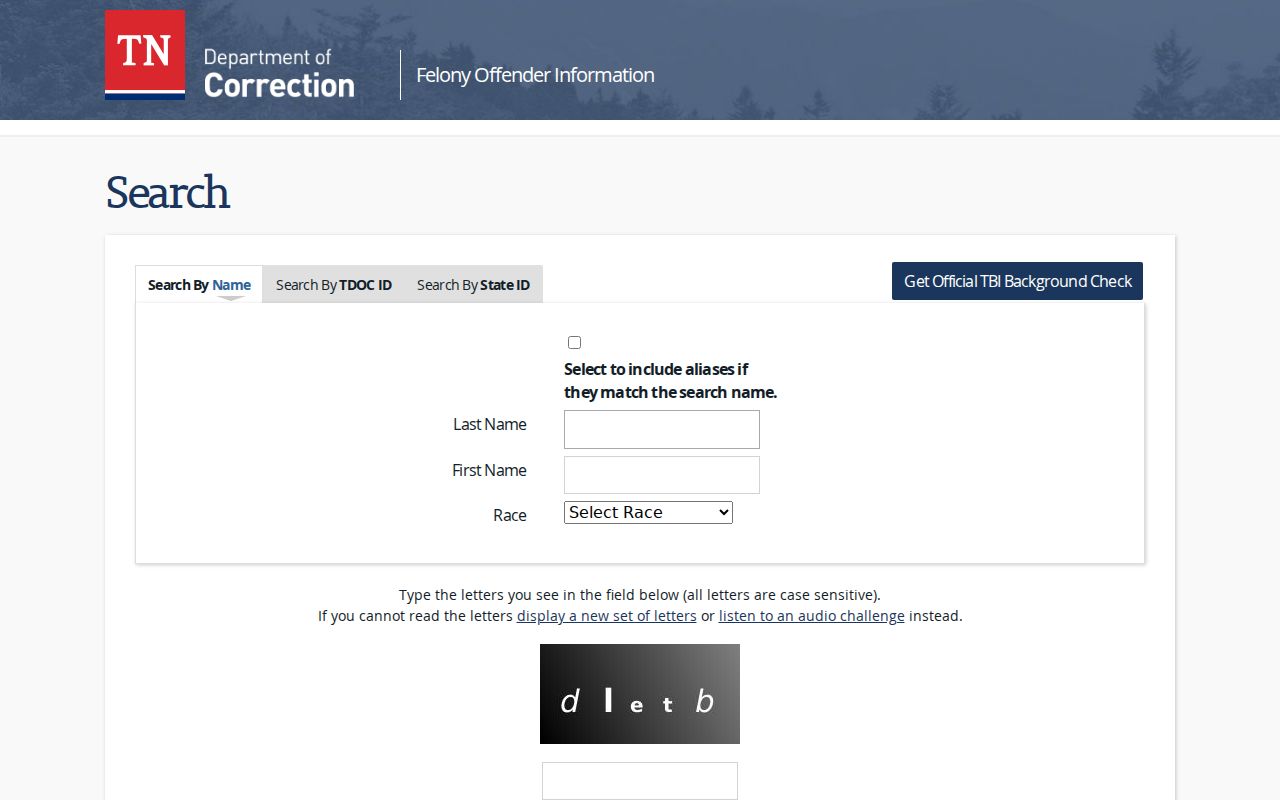
The FOIL interface is useful after state sentencing, but it does not show a DeKalb jail pod, local booking number, magistrate, or current pretrial bond.
The TDOC FOIL information page also routes users to VINELink and the MyTN app.
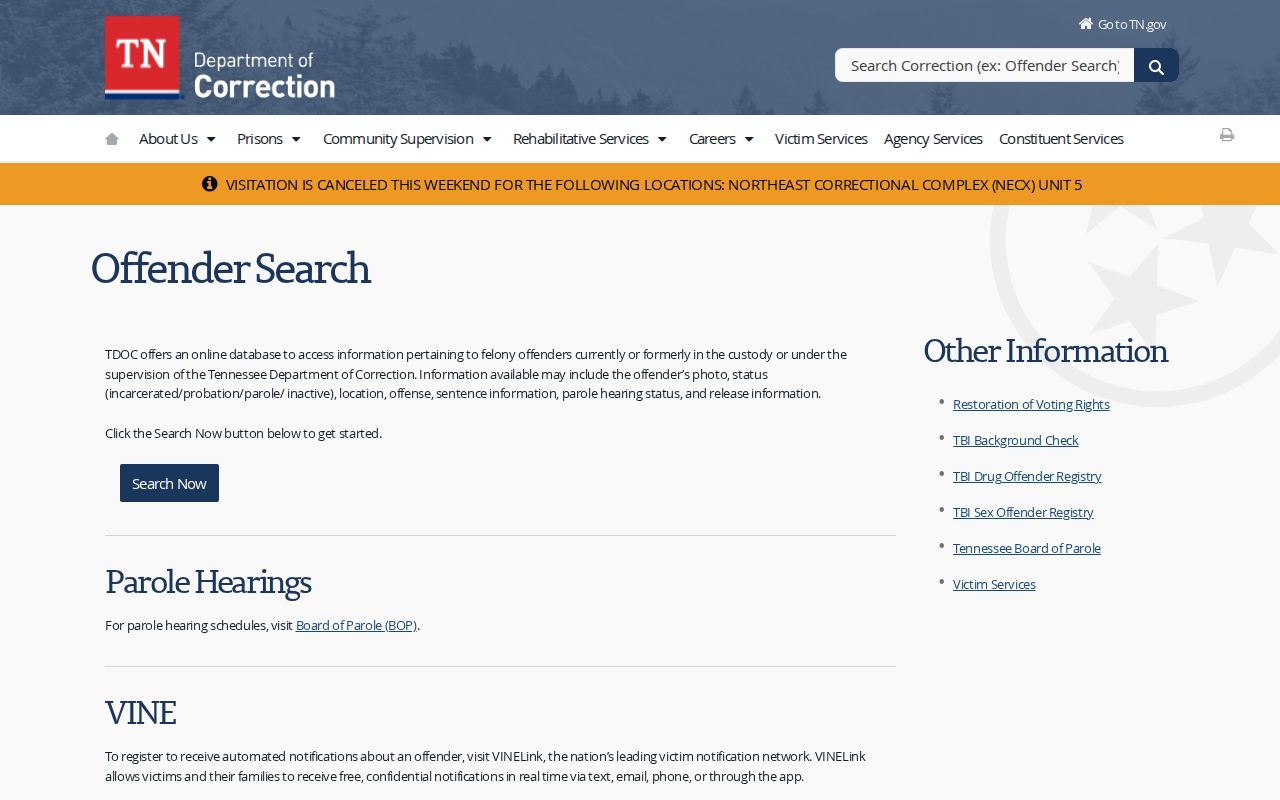
VINELink provides custody notices by phone, text, email, or app. MyTN includes FOIL under Public Safety. No verified DeKalb sheriff or local police mobile app was located.
Arrests vs Convictions
An arrest records custody and an allegation. A conviction records a court's finding of guilt after a plea or verdict. The sheriff or arresting agency can verify the initial DeKalb County event, but the court clerk holds the final judicial result. TORIS may connect fingerprint-supported arrest cycles with dispositions reported by courts, yet a lag can leave an outcome missing. Compare the booking sheet with the filed case and signed judgment.
| Arrest Record | Conviction Record |
|---|---|
| Created by the arresting agency and jail | Created by General Sessions or Criminal Court |
| Proves an arrest or booking was recorded | Proves a court entered a finding of guilt |
| Held by the agency and DeKalb sheriff | Held by the Circuit Court Clerk and reported to TBI |
| May lead to release, no charge, dismissal, or a case | May lead to sentence, later motion, appeal, or eligible expungement |
A dismissal updates the case outcome, but it does not automatically erase the fact that booking occurred. Tennessee expungement begins in the court where an eligible charge ended. Once a judge signs the order, the clerk sends it to the arresting agency, jail, TDOC, and TBI as applicable. Each custodian must update its own system, so records may disappear at different times.
Note: A DeKalb County arrest is not proof of guilt, and the charge may be declined, dismissed, or end in acquittal.
DeKalb Fingerprints Reach TBI
During booking, the jail records identity, property, initial charges, fingerprints, and a photograph. Qualifying fingerprint data moves to the Tennessee Bureau of Investigation, the central criminal-history repository. TBI later depends on the clerk and prosecutor to report dispositions and expungements through Tennessee FlexCheck. A citation or arrest that was not properly fingerprinted may never become a repository cycle.
If TORIS shows the DeKalb County arrest but no outcome, obtain the final order from Room 201 and use TBI's correction route. If the court dismissed the case, that result does not itself remove every arrest or booking trace. Eligible relief begins with a local expungement order under T.C.A. §40-32-101, followed by distribution to the arresting agency, jail, TDOC, and TBI.
TORIS is broader than the DeKalb courthouse because it can cover fingerprint-supported events from elsewhere in Tennessee. It is also less detailed. It does not replace the incident narrative, booking inventory, motions, or signed judgment. Aliases are not searched, and a citation that was never properly fingerprinted may be absent. Compare the repository cycle with the local source before drawing a conclusion.
Note: A missing TORIS cycle can reflect absent fingerprints, while a blank outcome can reflect delayed disposition reporting.